
LED outdoor displays are replacing static billboards with high‑brightness, networked LED systems that enable instant creative updates, programmatic buys, and precise audience targeting LED panel. They cut energy use ~40–60%, reduce onsite service hours via modular components and telemetry, and deliver measurable impressions, dwell times, and conversion metrics. Adjustable luminance and photometric modeling mitigate regulatory risk while OTA updates lower downtime. These shifts drive faster ROI and operational scale — continue for practical best practices, constraints, and implementation guidance.
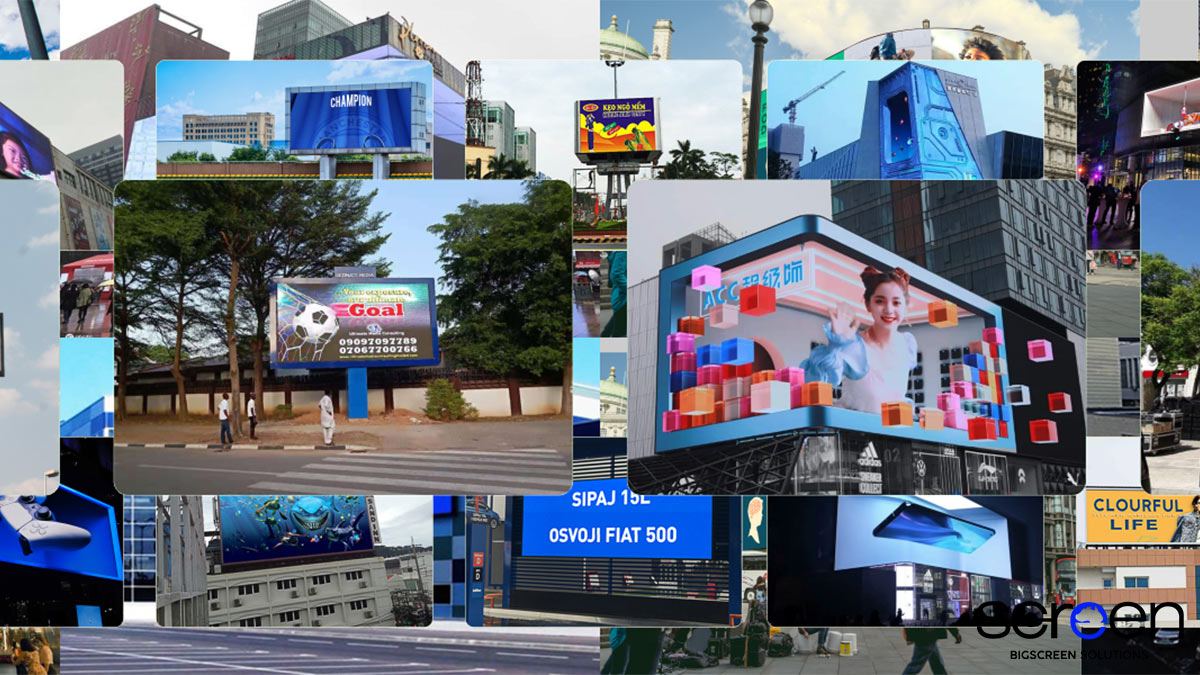
The Evolution of Outdoor Advertising Technology
Tracing back to painted billboards and incandescent-lit signs, outdoor advertising technology has shifted toward digital LED systems that deliver higher brightness (5,000–10,000 nits for outdoor use), reduced energy consumption (LEDs can cut power draw by 40–60% versus legacy fixtures), and greater programmatic flexibility through networked content management. The evolution moved from static analog murals and mechanical displays to dynamic formats including kinetic posters and pixel-based matrices that enable targeted scheduling. Metrics-driven deployment emphasizes reach, dwell time, and contextual relevance; operators prioritize modular hardware LED advertising board, remote diagnostics, and OTA updates to minimize downtime. Market trends show accelerated urban rollout, convergence with mobile tracking, and increased demand for creative autonomy among advertisers seeking unfettered control over timing and messaging.
Advantages of LED Displays Over Traditional Billboards
LED outdoor displays deliver measurable advantages over traditional billboards by combining higher luminance, energy efficiency, and real‑time control: typical outdoor LEDs operate at 5,000–10,000 nits, sustain 40–60% lower power consumption than legacy lighting, and support instant content updates via networked CMS. Operators gain greater reach per watt and reduce site downtime with lower maintenance requirements; modular panels and diagnostic telemetry cut onsite service hours by an estimated 30–50%. Spatial flexibility enables denser, variable-size installations without costly structural alterations. Measurable impressions, CPM optimizations, and programmatic buy-ins improve ROI transparency, aligning with a market that values autonomy and rapid deployment. Adoption curves show accelerating replacement of static assets as advertisers prioritize performance, operational cost savings, and real‑time control.
Creative Strategies Enabled by Dynamic Content
Brands increasingly leverage LED displays to publish real-time promotional updates, with studies showing time-sensitive offers can lift conversion rates by double-digit percentages. Dynamic content also enables interactive audience engagement through QR-triggered experiences and sensor-driven ads that adapt to foot traffic patterns. Early adopters report measurable gains in dwell time and campaign recall when combining live updates with interactive elements.

Real-Time Promotional Updates
Leveraging dynamic content, advertisers can deploy real-time promotional updates that respond to live data feeds—weather, inventory, foot traffic, or social trends—delivering contextually relevant offers that increase engagement and conversion rates. Brands use instant pricing adjustments to clear stock or capitalize on demand spikes, with measurable lift in sales per impression. Event countdowns drive urgency for limited-time activations, tracked against dwell time and redemption metrics. Automated rules and APIs enable rapid, permissioned changes without manual intervention, freeing marketers to iterate creative strategies. Data dashboards correlate external signals with conversion velocity, informing predictive models that optimize timing and messaging. This approach prioritizes agility, measurable ROI, and consumer autonomy by presenting timely, relevant choices in public spaces.
Interactive Audience Engagement
How can dynamic content transform passerby interaction into measurable engagement? Data indicates touch responsive kiosks increase dwell time by up to 60%, converting casual viewers into active participants. Brands deploy location-aware triggers and gamified viewership contests to capture attention, collect consented metrics, and drive opt-ins. Real-time analytics quantify impressions, interaction depth, and conversion funnels, enabling iterative creative optimization. Trend forecasts show rising demand for modular experiences that respect personal autonomy while offering rewards—discount tokens, exclusive content, or badge systems. Measured outcomes include higher attribution accuracy and improved cost-per-acquisition. Implementation best practices emphasize privacy-first data capture, seamless mobile handoffs, and A/B testing of interaction flows. The result: scalable, freedom-oriented engagement models that translate dynamic LED creativity into verifiable ROI.
Targeting, Measurement, and Data-Driven Campaigns
Advertisers increasingly leverage LED outdoor displays to execute precise audience targeting using location, time-of-day, and contextual signals. Integrated sensors and programmatic platforms enable real-time performance metrics—impressions, dwell time, and conversion proxies—that inform immediate creative and placement adjustments. This shift toward data-driven campaigns is driving measurable uplift in relevance and return on ad spend.
Precise Audience Targeting
Where are the most receptive audiences located, and which creative elements drive measurable engagement on LED outdoor displays? Analysis shows location analytics and demographic segmentation identify high-conversion zones—transit hubs, lifestyle corridors, and event districts. Creative tests isolate short headlines, motion cues, and color contrast as engagement multipliers. The approach emphasizes autonomy for advertisers to choose strategies aligned with brand intent.
- Spatial targeting: map footfall density to place contextually relevant ads.
- Audience profiling: align messaging with age, income, and lifestyle cohorts.
- Creative optimization: deploy A/B-tested visuals that respect viewer attention spans.
This data-driven, trend-focused model empowers brands to target precisely without overreach, maximizing impact while preserving audience freedom and minimizing wasted impressions.
Real-Time Performance Metrics
Leveraging real-time performance metrics enables campaign managers to adapt targeting and creative decisions instantly, converting live audience signals—impressions, dwell time, movement flows, and attribution touchpoints—into actionable optimizations. The system ingests live analytics from LED outdoor displays, correlating contextual variables (time, weather, footfall) with message variants to refine reach and frequency. Automated rules adjust creative rotation and bidding when conversion tracking thresholds shift, preserving budget efficiency and maximizing uplift. Heatmaps and short-window A/B tests surface high-performing placements and creatives, enabling rapid scaling or pullback. Reporting dashboards deliver transparent, exportable datasets for stakeholder autonomy, while privacy-compliant integrations guarantee ethical measurement. The result is liberated campaign control: faster learning cycles, measurable ROI, and strategic freedom to iterate.
Operational and Environmental Benefits for Advertisers
In urban and suburban installations alike, LED outdoor displays reduce operational costs and environmental impact by consuming 50–70% less energy than equivalent fluorescent or incandescent signage, lowering utility expenses while cutting greenhouse gas emissions. Advertisers gain measurable returns through energy savings and maintenance efficiency, with analytics showing faster payback periods and reduced resource consumption. Lower failure rates and modular components minimize downtime, enabling agile content strategies that respect autonomy and choice.
- Reduced energy use: drops operational bills and carbon footprint, supporting brand sustainability commitments.
- Simplified upkeep: remote diagnostics and modular repair lower labor hours and spare-part inventories.
- Extended lifespan: durable LEDs reduce replacement cycles, freeing capital for creative testing.
Data-driven adopters prioritize freedom to scale while lowering costs.
Challenges, Regulations, and Best Practices
1 key set of considerations for LED outdoor displays involves negotiating regulatory frameworks, technical limitations, and community concerns that directly affect deployment timelines and ROI. Stakeholders track evolving lighting standards and local permit compliance metrics to quantify approval risk; cities report permit approval times varying 30–180 days. Technical constraints—brightness, refresh rate, power draw—pin operating costs and influence content strategies that respect nuisance-light ordinances. Best practices prioritize pre-application audits, photometric modeling, and community engagement to reduce objections by up to 60%. Data-driven procurement selects modules with adjustable luminance and energy management for compliance and autonomy. Ongoing monitoring, documented maintenance schedules, and transparent reporting maintain regulatory alignment while preserving advertiser freedom to target audiences efficiently.
Frequently Asked Questions
How Much Do LED Outdoor Displays Cost to Purchase and Install?
Costs vary widely: purchase options range from $5,000 for small units to $250,000+ for large, high-resolution systems; installation timelines typically span one week to three months depending on permitting, site prep, and integration complexity.
What Is the Typical Lifespan of an LED Outdoor Display?
Typically 7–10 years; with rigorous maintenance and quality components some last 10–15 years. Panel degradation drives performance decline; buyers examine warranty terms, maintenance schedules, and brightness retention metrics to preserve operational freedom.
Can LED Displays Be Integrated With Mobile Marketing and Apps?
Yes. It enables QR campaigns and Beacon integration for real-time engagement; studies show mobile-trigger rates rising ~25% year-over-year. Operators automate content, personalize offers, and preserve user autonomy through opt-in permissions and lightweight app experiences.
Do LED Outdoor Ads Impact Local Wildlife or Light Pollution?
Yes. Studies show LED outdoor ads cause wildlife disturbance and contribute to skyglow increase, altering nocturnal behaviors and migration patterns; trends indicate expanding installations worsen impacts unless regulations, shielding, scheduling, and dimming mitigate cumulative effects.
How Are LED Displays Protected Against Vandalism and Extreme Weather?
They employ tamper resistant casing and reinforced mounting, weatherproof seals, corrosion‑resistant materials, and redundant temperature control; data shows reduced failure rates and vandal incidents, enabling autonomous, resilient outdoor messaging aligned with user freedom.
Conclusion
LED outdoor displays are reshaping commercial advertising by combining superior visibility, programmability, and measurable performance. Brands leverage dynamic content to increase engagement, tailor messages by time and audience, and integrate real-time data for optimized placements. Operational efficiencies and lower lifecycle costs make LEDs economically attractive, while energy and maintenance gains address sustainability goals. Steering through regulations and standardizing metrics will be critical as advertisers scale LED networks for targeted, performance-driven campaigns.